Screen time and sleep interact through three separate mechanisms, not one: blue light suppresses melatonin, the content itself keeps your brain alert, and every minute on the phone displaces a minute of sleep. Adults who use a screen within an hour of bed sleep an average of 28 minutes less per night.
That is why blue-light glasses alone rarely fix it — they address one mechanism out of three. Below: exactly how each one works, what the research says each costs you, and the changes that actually move the number.
The Science of Screen-Induced Sleep Disruption
Screens affect sleep through multiple independent mechanisms, each of which is problematic on its own. Together, they create a perfect storm of sleep disruption.
Blue Light and Melatonin Suppression
The most widely discussed mechanism is blue light suppression of melatonin. Your phone, tablet, and computer screens emit light in the blue wavelength (approximately 450-490 nanometers), which is the same wavelength that naturally signals “daytime” to your brain. When this light hits the photosensitive retinal ganglion cells in your eyes, it sends a signal to the suprachiasmatic nucleus — your body’s master clock — to suppress melatonin production.
Melatonin is the hormone responsible for initiating sleep. It typically begins rising 2-3 hours before your natural bedtime, creating the feeling of drowsiness. Screen exposure in the evening can delay this melatonin rise by 1.5 to 3 hours, effectively shifting your biological clock forward and making it difficult to fall asleep at your intended bedtime.
The Blue Light Numbers
Cognitive and Emotional Stimulation
Blue light gets most of the attention, but researchers increasingly believe that the content on our screens is equally or more disruptive to sleep. Scrolling social media, reading news, watching videos, or engaging in text conversations keeps your brain in an active, alert state. This cognitive arousal is the opposite of what your brain needs to transition into sleep.
Emotionally stimulating content is particularly harmful. A provocative tweet, a stressful email, or an exciting video triggers cortisol and adrenaline release — stress hormones that directly counteract sleep. Even positive emotional stimulation (a funny video, a heartwarming post) keeps the brain engaged and alert when it should be winding down.
A 2025 study compared three groups: one that read a physical book before bed, one that used a phone with a blue light filter, and one that used a phone without a filter. Both phone groups took significantly longer to fall asleep than the book group, and there was only a modest difference between the filtered and unfiltered phone groups. The content, not just the light, was the primary sleep disruptor.
Content Matters More Than Filters
The Displacement Effect
Perhaps the simplest mechanism is displacement: time spent on your phone is time not spent sleeping. It sounds obvious, but the numbers are revealing. The average person uses their phone for 52 minutes after getting into bed. If that same person needs 8 hours of sleep and has a 6:30 AM alarm, those 52 minutes push their actual sleep onset from 10:30 PM to 11:22 PM, reducing sleep to about 7 hours before accounting for the time needed to fall asleep after putting the phone down.
Compounding this is the “just one more” effect. The autoplay features, infinite scroll, and algorithmic recommendations on modern platforms are specifically designed to prevent you from stopping. What starts as a quick check becomes 20 minutes, which becomes an hour. Every minute displaces a minute of sleep — and if that pattern is nightly, read how to stop doomscrolling, which is the specific version of this habit that happens after 11pm.
What the Research Shows
Sleep Duration
A meta-analysis of 36 studies involving over 125,000 participants found that adults who use screens within one hour of bedtime sleep an average of 28 minutes less per night than those who do not. While 28 minutes may sound modest, cumulative sleep debt is powerful. Over a week, that is 3.3 hours of lost sleep. Over a month, it is nearly 14 hours — almost two full nights.
Children and teenagers are even more affected. Adolescents with a screen in their bedroom (phone, tablet, TV, or computer) sleep an average of 47 minutes less per night than those without screens in the bedroom. This chronic sleep deficit is linked to academic underperformance, mood disorders, and impaired immune function.
Sleep Quality
Sleep duration tells only part of the story. Sleep quality — how restorative your sleep actually is — is equally important. Screen use before bed is associated with reduced time in deep sleep (slow-wave sleep) and REM sleep, the two most restorative sleep stages. Even if you sleep for 8 hours after phone use, the quality of those 8 hours is measurably worse.
Wearable sleep trackers have made this visible to everyday users. Many people are shocked to see their deep sleep drop from 1.5 hours to under 45 minutes on nights when they use their phone extensively before bed. The impact on next-day cognitive performance, emotional regulation, and physical recovery is significant.
The Deep Sleep Deficit
Sleep Onset Latency
Sleep onset latency — the time it takes to fall asleep after intending to — is significantly increased by pre-bed screen use. The average person takes about 15 minutes to fall asleep under ideal conditions. After 30 minutes of phone use in bed, this extends to approximately 35-42 minutes. The combination of blue light suppressing melatonin and cognitive arousal from content creates a state of being tired but unable to sleep — a frustrating experience that many people recognize.
Night Wakings
Screen use before bed is also associated with more frequent night wakings. Studies show that people who use their phone within 30 minutes of sleep wake an average of 1.4 more times during the night than those who have a phone-free wind-down period. These wakings fragment sleep architecture and reduce the proportion of time spent in deep and REM stages.
Notification sounds and vibrations compound this problem. Even brief awakenings triggered by notifications disrupt sleep cycles. A phone that buzzes at 2 AM might wake you for only 15 seconds, but that interruption can prevent you from completing a full REM cycle, affecting memory consolidation and emotional processing.
Airplane Mode Is Not Enough
The Vicious Cycle
Screen time and sleep have a bidirectional relationship that creates a vicious cycle. Poor sleep leads to reduced self-control and increased impulsivity the next day, which leads to more mindless phone use, which leads to worse sleep the following night. This cycle is self-reinforcing and can escalate rapidly.
Sleep-deprived individuals show increased activity in the brain’s reward centers in response to stimulating content, making social media and entertainment apps even more appealing when you are tired. This is your brain seeking the quick dopamine hit that it is not getting from rest. The result is a pattern where the people who most need to put their phones down are the least able to do so.
Who Is Most Vulnerable?
Teenagers and Young Adults
Adolescent brains are uniquely vulnerable to screen-induced sleep disruption. The biological shift in circadian rhythm during puberty already pushes teenagers toward later bedtimes. Adding screen use to this existing delay compounds the problem, with many teens not achieving biological readiness for sleep until well past midnight.
The consequences are severe. Chronic sleep deprivation in teenagers is linked to a 40% increase in anxiety symptoms, a 30% increase in depressive symptoms, reduced academic performance equivalent to one full letter grade, increased risk of obesity, and impaired driving performance comparable to mild intoxication.
Remote Workers
People who work from home often struggle to separate work screens from personal screens. When your office is your bedroom and your work device is also your entertainment device, the boundary between productive screen time and recreational screen time dissolves. Remote workers report higher rates of evening work email checking, which directly delays sleep onset.
People with Existing Sleep Issues
Individuals who already struggle with insomnia or other sleep disorders are disproportionately affected by screen use. For someone who takes 30 minutes to fall asleep under ideal conditions, adding screen-induced arousal can push sleep onset to an hour or more, creating a cycle of frustration and anxiety that further impairs sleep.
Practical Solutions
The 90-Minute Digital Sunset
The single most impactful change you can make is to stop using all screens 90 minutes before your target bedtime. This gives your brain enough time to wind down, allows melatonin to rise naturally, and prevents the cognitive arousal that delays sleep onset. Replace screen time with activities like reading a physical book, gentle stretching, journaling, conversation, or meditation.
Create a Phone-Free Bedroom
Charge your phone in another room. Use a traditional alarm clock to wake up. This one change eliminates bedtime scrolling, nighttime notification disruptions, and the morning phone check that starts your day reactively. People who adopt this practice consistently report it as one of the most transformative changes they have ever made.
Use Technology to Limit Technology
If willpower alone is not enough (and for most people, it is not), use tools to enforce your digital sunset. An app blocker that activates automatically in the evening can remove the temptation entirely. RepUnlock is particularly effective for this purpose — if you set distracting apps to require exercise to unlock, you are unlikely to do 20 squats at 10 PM just to check Instagram. The physical barrier is far more effective than a mental one.
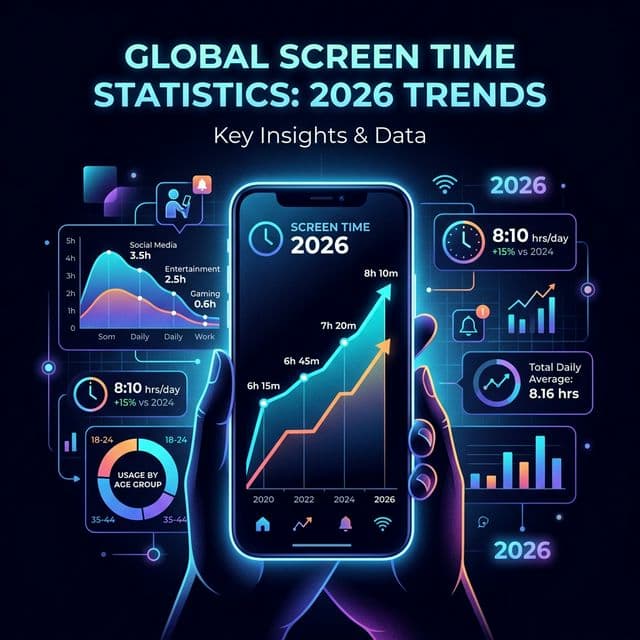
Learn more about how to reduce your screen time effectively with practical tools and strategies, or see where your own evening sits against the 2026 screen time averages.
The Replacement Principle
If You Must Use Screens
If you cannot avoid screens in the evening, minimize the damage. Enable Night Shift or a blue light filter. Keep brightness as low as comfortable. Avoid social media, news, and email — opt for calming content if you must use a screen. Set a hard stopping time and use an alarm to enforce it. And position the screen at arm’s length rather than close to your face, which reduces the intensity of blue light reaching your eyes.
The Morning Matters Too
The Connection Between Exercise and Sleep
Here is where the story comes full circle. Regular physical exercise is one of the most powerful natural sleep aids available. It increases deep sleep duration, reduces sleep onset latency, improves sleep quality, and regulates circadian rhythm. The benefits are comparable to prescription sleep medication without the side effects.
This is why RepUnlock’s approach fits the sleep problem so well. By converting screen time impulses into exercise throughout the day, it works on both sides of the equation at once: less screen time (removing the sleep disruptor) and more movement (adding a sleep promoter). The same reach for the phone that would have cost you sleep at 11pm instead buys a set of squats at 3pm.
Measuring Your Progress
Track your improvement by noting three metrics: how long it takes you to fall asleep, how many times you wake during the night, and how rested you feel on a 1-10 scale each morning. Compare your results on phone-free evenings versus screen-heavy evenings. Most people see a dramatic difference within the first week.
If you use a wearable sleep tracker, pay attention to your deep sleep and REM sleep percentages. These are the most sensitive indicators of screen-related sleep disruption. An improvement of even 10-15 minutes in deep sleep translates to noticeably better cognitive performance and emotional regulation the next day.
Taking the First Step Tonight
You do not need to overhaul your entire evening routine at once. Tonight, try one thing: set an alarm for 60 minutes before your target bedtime. When it goes off, put your phone in another room and do something analog until sleep. Notice how you feel tomorrow morning. That single data point will be more convincing than any study.
If you want more support, explore our comprehensive guide on overcoming phone addiction, which covers strategies that extend well beyond sleep. Your sleep quality is the foundation of everything else — your mood, your productivity, your health, your relationships. Protecting it from screen interference is one of the highest-return investments you can make in yourself.