You break phone addiction by replacing the habit, not by resisting it. The craving arrives whether you approve of it or not, so the thing that works is putting something else where the feed used to be — and making the phone cost something to open. The 10 strategies below are ordered by how much they change, not by how easy they are.
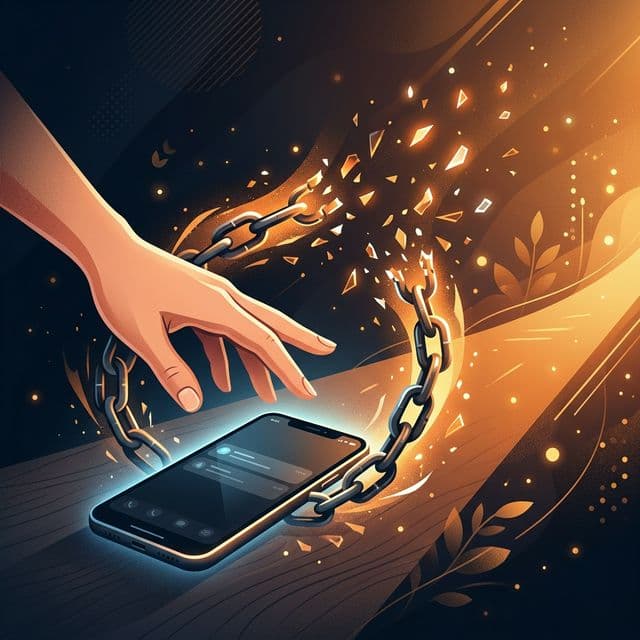
If you've ever picked up your phone to check the time and found yourself scrolling 30 minutes later, that is not a willpower failure. Apps are specifically designed to exploit your brain's reward system, and they are very good at it.
Understanding Phone Addiction: Why It's So Hard to Stop
Before diving into solutions, it helps to understand why your phone is so addictive. Every notification, like, and comment triggers a small dopamine release in your brain — the same neurotransmitter involved in gambling, sugar, and other addictive behaviors.
Social media apps use variable reward schedules (the same mechanism as slot machines) to keep you pulling to refresh. Sometimes you see something interesting, sometimes you don't — and that unpredictability is precisely what makes it addictive.
The Dopamine Connection
10 Science-Backed Tips to Break Phone Addiction
Replace the Habit, Don't Just Remove It
Trying to stop using your phone through willpower alone rarely works. Instead, replace the scrolling habit with a positive alternative. When you feel the urge to check your phone, do 10 push-ups, take a short walk, or read a page of a book.
Apps like RepUnlock automate this by requiring physical exercise before unlocking distracting apps — turning a bad habit into a good one. The reason movement works better than most substitutes is neurological, and we go through it in exercise and phone addiction.
Create Physical Distance
The simplest, most effective strategy: put your phone in another room. A University of Texas study found that even having your phone on the desk (face down, silent) reduces cognitive capacity. Physical distance eliminates the temptation entirely.
During work hours, try charging your phone in a different room. During meals, leave it in your bag. At bedtime, charge it outside the bedroom.
Turn Off All Non-Essential Notifications
The average smartphone user receives 80+ notifications per day. Each notification is an interruption that pulls you back to your phone. Go through every app and turn off notifications for everything except calls, texts from close contacts, and calendar reminders.
Use Grayscale Mode
Color is one of the main tools apps use to grab your attention. Red notification badges, vibrant social media feeds — they're all designed to be visually stimulating. Switching your phone to grayscale mode makes it dramatically less appealing.
On iPhone: Settings → Accessibility → Display → Color Filters → Grayscale. Try it for a week and notice how much less you reach for your phone.
Set Up an App Blocker with Real Consequences
Apple's built-in Screen Time is too easy to bypass — one tap on "Ignore Limit" and you're back to scrolling. Use a dedicated app blocker that creates meaningful friction.
RepUnlock's exercise-to-unlock approach is particularly effective because bypassing it requires actual physical effort. You can still access your apps, but you have to earn it — and you get healthier in the process.
Practice the 10-Minute Rule
When you feel the urge to check your phone, wait 10 minutes. Set a timer if needed. Research shows that most urges pass within 10-15 minutes. If you still want to check your phone after the wait, go ahead — but you'll find that most of the time, the urge fades. If the urges are constant rather than occasional, the problem is baseline overstimulation, and a dopamine detox is the more direct intervention.
Design Your Home Screen for Intention
Remove all social media apps from your home screen. Keep only tools that help you be productive or creative. Move distracting apps to the last page of your phone, inside a folder labeled something like "Time Wasters" — the label itself creates awareness.
- Home screen: Calendar, Notes, Camera, Maps, Fitness
- Hidden folder: Instagram, TikTok, YouTube, Twitter, Reddit

Removing the habit leaves a hole, and the feed is very good at filling it. Volt takes that slot instead: one rep banks one minute, and he is empty until you move.
Get RepUnlockEstablish Phone-Free Rituals
Create daily rituals that don't involve your phone:
- Morning: No phone for the first 30 minutes after waking
- Meals: All phones away during eating
- Evenings: No phone 1 hour before bed — the hardest of the four, and the one how to stop doomscrolling is written for
- Conversations: Phone stays in pocket when talking to someone
Track Your Usage (The Numbers Will Shock You)
Most people drastically underestimate their phone usage. Check your Screen Time report right now — the average person spends 7+ hours per day on their phone. Seeing the actual number is often the wake-up call needed to make a change.
Set a weekly goal to reduce your screen time by 30 minutes. Small, consistent improvements compound into massive changes over months.
Find an Accountability Partner or Community
You're 65% more likely to succeed with accountability. Share your screen time reduction goal with a friend, join an online community, or use apps with social features. In RepUnlock you can see friends working out live and challenge them, or set up a head-to-head contract where you both agree in advance how long it runs and what the loser owes.
How Long Does It Take to Break Phone Addiction?
Research on habit formation suggests it takes an average of 66 days to form a new habit (not the commonly cited 21 days). However, most people report noticeable improvements in their phone usage within the first 1-2 weeks of implementing these strategies.
The key is consistency, not perfection. If you slip up and binge-scroll one evening, don't give up. Just restart the next day. Progress isn't linear.
Start Small, Build Momentum
The Bottom Line
Phone addiction is real, but it's not permanent. By understanding the science behind why your phone is addictive and implementing proven strategies like habit replacement, physical distance, and meaningful friction, you can dramatically reduce your screen time and reclaim your attention.
Ready to start? Download RepUnlock — the app that turns your phone addiction into a workout habit. It's free, and your brain (and body) will thank you.